
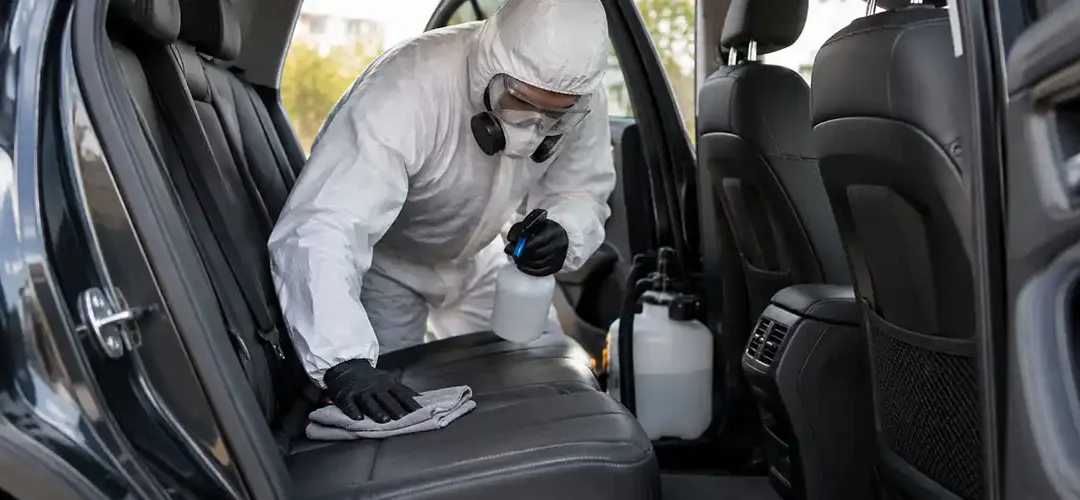
When a deceased person is discovered inside a car, truck, van, or other vehicle, emergency personnel and law enforcement will generally handle the immediate situation. The deceased person must first be removed by the appropriate authorities, and investigators may need time to examine and document the vehicle. The vehicle should not be cleaned, moved, or disturbed until it has officially been released.
Once the investigation is complete, the vehicle may look relatively normal from the outside while containing significant contamination inside. That is especially true when the individual was not discovered immediately.
Decomposition Inside a Vehicle Can Cause Extensive Contamination
After death, the body naturally begins to decompose. As decomposition progresses, bodily fluids can be released and migrate into surrounding materials.
Inside a vehicle, those fluids may penetrate:
- Upholstery
- Seat cushions and foam
- Carpet
- Floor coverings
- Seat tracks and mounting points
- Plastic trim
- Interior panels
- Storage compartments
- Vehicle flooring
The contamination visible on the surface may only represent a portion of what is actually present. For example, decomposition fluid that appears to be confined to a vehicle seat may have penetrated through the upholstery and into the foam underneath. In more severe situations, biohazards may reach the floor beneath the seat or migrate into seams and other difficult-to-access areas. Simply wiping down the visible surface does not necessarily resolve the problem.
Why Decomposition Odor in a Vehicle Can Be Difficult to Remove
One of the most common concerns following a death inside a vehicle is decomposition odor.
People sometimes assume that an air freshener, ozone treatment, detailing service, or heavy-duty cleaner will eliminate the smell. However, if contaminated material remains inside the vehicle, the odor can return.
Odor is frequently an indication that biological material remains somewhere within the vehicle.
Porous materials such as seat foam, carpeting, padding, and fabric can absorb decomposition fluids. When contamination penetrates deeply into these materials, cleaning the surface alone may not be enough.
Effective decomposition odor remediation begins by locating and addressing the source.
Affected porous materials may need to be removed rather than simply cleaned. Once contaminated materials have been properly removed and the remaining surfaces have been cleaned and disinfected, additional odor-control procedures can be performed as needed.
Can the Interior of the Vehicle Be Saved?
Sometimes.
Every vehicle biohazard cleanup is different. The amount of restoration required depends on factors such as:
- Where the person was located
- How long the person remained inside the vehicle
- The extent of decomposition
- The amount of biological fluid released
- Which parts of the interior were affected
- Whether fluids penetrated into foam, carpeting, flooring, or structural areas
- The age and condition of the vehicle
Hard, nonporous components may often be cleaned and disinfected when they can be safely accessed. Porous materials can present a greater challenge because biological fluids may penetrate beneath the surface. This means removing contaminated carpeting, padding, upholstery, foam, or other interior components.
The goal is not simply to make the vehicle look clean. Proper biohazard remediation means addressing the contaminated materials themselves.
Why a Regular Car Detailer May Not Be the Right Choice
A vehicle detailer can do an excellent job cleaning ordinary dirt, spills, stains, and odors. A death inside a vehicle is different. Blood, decomposition fluids, and other potentially infectious materials require specialized handling. Contaminated materials may also require appropriate packaging, transportation, and disposal.
A professional vehicle biohazard cleanup company is trained to work with these hazards while using appropriate personal protective equipment, cleaning procedures, disinfectants, and waste-handling practices.
Bio SoCal specializes in biohazard cleanup rather than conventional automotive detailing.
What Happens to Contaminated Seats and Carpet?
Whenever possible, Bio SoCal evaluates which materials can be safely cleaned and which materials may need to be removed. A lightly affected hard surface may be cleanable. A seat cushion saturated with decomposition fluid is a very different situation.
Because upholstery foam and carpet padding are porous, biohazards can penetrate deeply into them. When that occurs, removing the affected material is be necessary to properly remediate the vehicle. Other parts of the vehicle may then be cleaned, disinfected, and treated for residual odor.
Can Auto Insurance Pay for Death-in-Car Cleanup?
In most circumstances, auto insurance covers professional biohazard remediation of a vehicle, including cleanup following a death. Coverage depends on the policy, circumstances of the loss, carrier, and applicable exclusions.
Bio SoCal regularly works with insurance companies and can assist customers with documentation related to vehicle biohazard claims.
Before authorizing major remediation or disposal of vehicle components, it can be helpful to contact the insurance carrier and determine whether a claim should be opened. Insurance representatives may request photographs, estimates, documentation of contamination, or other information related to the cleanup.
Bio SoCal can work with vehicle owners and insurers throughout this process.
Could the Vehicle Be Considered a Total Loss?
Severe biohazard contamination can sometimes make restoration impractical. For example, extensive decomposition fluids may affect multiple layers of the interior or penetrate areas that are difficult or impossible to adequately access.
The cost of removing and replacing contaminated interior materials may also become significant relative to the value of the vehicle. Ultimately, the insurance company determines whether an insured vehicle qualifies as a total loss under the applicable policy and claim.
Professional documentation of the contamination can help provide the insurer with information needed to evaluate the loss.
Do Not Attempt to Clean the Vehicle Yourself
It is understandable for someone to want to begin cleaning immediately, particularly if the vehicle belongs to a loved one. However, entering or disturbing a vehicle contaminated with blood or decomposition fluids can create unnecessary exposure. There may also be contamination beneath seats, underneath carpeting, inside seams, or in areas that are not immediately visible.
Until the vehicle has been professionally evaluated, it is generally best to limit access and keep other people and pets away from the affected interior.
Professional Car Biohazard Cleanup in Southern California
Bio SoCal provides discreet professional car biohazard cleanup, death-in-car cleanup, blood cleanup, decomposition cleanup, and odor remediation throughout Southern California. Our technicians understand that these situations often occur during extremely difficult circumstances. We approach each vehicle with professionalism, discretion, and respect.
When appropriate, we can also assist with documentation for an auto-insurance claim.
If a deceased person has been discovered inside a vehicle, wait until law enforcement or the appropriate authorities have officially released the vehicle before beginning cleanup.
Once the vehicle has been released, Bio SoCal can evaluate the contamination, determine which materials may require removal, clean and disinfect affected areas, address decomposition odor, and help guide you through the remediation process.
Bio SoCal is available 24 hours a day, 7 days a week, 365 days a year for professional biohazard cleanup throughout Southern California.
